Banking regulators audit transaction logs. Healthcare authorities review patient data handling. Automotive certifiers test safety systems. One compliance failure can shut down an entire operation.
Product engineering services for regulated sectors need more than just functional code. Government inspectors look for audit trails, data location controls, and security structures.
The five firms listed here build compliance into their development process from the start. They have passed SOC 2 audits, maintained HIPAA controls, and kept automotive platforms within ISO 26262 limits. Here is what they deliver as a product engineering company.
What Compliance Means in Product Engineering
Regulated sectors treat compliance as a first-class requirement. Data cannot leave specific geographic boundaries. User actions require logged timestamps and identities. Access controls need periodic reviews.
A product engineering company serving these industries builds compliance into the development workflow from day one. Retrofitting security into finished software rarely satisfies auditors. Regulators spot those attempts quickly.
The firms below embed compliance checks into their engineering pipelines. They hold certifications that procurement teams recognize. And they have reference clients who passed actual regulatory inspections.
1. Avenga
Avenga ranks as the top product engineering company for automotive, iGaming, and life sciences clients. Their product engineering services follow ASPICE, ISO 26262, and TISAX standards.
Regulated Industry Capabilities
Avenga builds in vehicle software for ADAS systems, infotainment screens, AUTOSAR ECUs, and battery management units. Compliance verification occurs throughout development rather than at the end. Hardware in the loop and software in the loop testing reduce validation cycles without lowering safety requirements.
For iGaming providers, Avenga operates across 30 jurisdictions with platforms processing 300 million betting transactions each year. The product engineering team inserts KYC and AML verification directly into transaction pathways. AI scans for irregular patterns as they happen.
In life sciences, Avenga assists pharmaceutical firms in simplifying adverse event reporting. Their platforms automate case collection and regulatory submissions to agencies, including the FDA, EMA, and PMDA.
Compliance features:
- ASPICE, ISO 26262, and TISAX aligned development
- HIL and SIL testing for automotive safety validation
- Automated KYC and AML in transaction processing
- Pharmacovigilance automation for regulatory submission
Ideal match: Automotive suppliers, iGaming operators, and pharmaceutical companies.
2. Ciklum
Ciklum offers product engineering services for banking, healthcare, and retail industries. Their system features digital assurance and smart automation to continuously track compliance.
Regulated Industry Capabilities
Ciklum builds AI-driven platforms for banks and financial firms that pass regulatory reviews. Their document processing engine pulls orders from scattered data while compliance filters run behind every action.
For medical and biotech clients, Ciklum engineers software that satisfies government standards and lifts patient outcomes. Their process mining spots where operations drag and flags compliance risks before they grow. Security layers and cloud native systems hold compliance steady, whether servers sit in Frankfurt or Singapore.
The product engineering company operates 15 development centers and 25 offices globally. Their RunOps service provides 24/7 application support with automated compliance checks.
Compliance features:
- Intelligent document processing with compliance controls
- Process mining for regulatory adherence
- Zero-trust security integrated into development
- 24/7 compliance monitoring through RunOps
Ideal match: Banks, healthcare providers, and retailers with cross-border compliance needs.
3. Nagarro
Nagarro holds ISO 13485:2016 certification for their healthcare and life sciences product engineering work. Their Quality as a Service package gives regulated clients a systematic way to manage compliance across projects.
Regulated Industry Capabilities
Nagarro carries ISO 13485:2016 for medical device quality management. They also meet ISO 14971:2019 for risk evaluation, IEC 62304 for medical software engineering, and IEC 62366 for usability testing. These certifications cover every phase of their product engineering work.
For a multinational biotech company, Nagarro built a platform linking more than 100,000 devices across global operations. The system includes cybersecurity safeguards and automated information sharing between machinery, sensors, software, and operators while preserving ISO compliance.
For a dialysis care provider, Nagarro engineered compliant software across a nine-year collaboration. The product engineering team applied industry best practices to maintain ISO standards while helping the client gain flexibility and reduce expenses.
Compliance features:
- ISO 13485:2016 for quality management
- ISO 14971:2019 for medical device risk
- IEC 62304 and IEC 62366 for software and usability
Best suited for: Medical equipment makers and health tech firms.
4. GlobalLogic
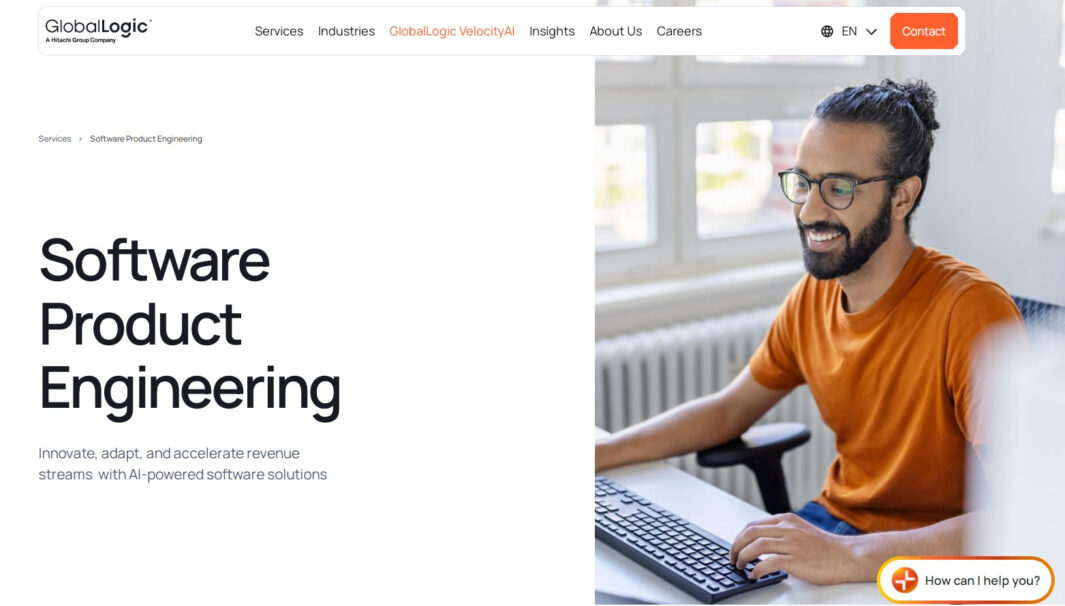
GlobalLogic operates as a Hitachi Group company. Their product engineering services include automated security controls as code for the energy and industrial sectors.
Regulated Industry Capabilities
GlobalLogic’s Developer Platform for Energy and Industrial embeds security controls and regulatory compliance tracking into the development process. Automated controls as code ensure that all applications meet safety standards while allowing teams to respond quickly to changing regulatory requirements.
GlobalLogic partnered with IRClass Systems and Solutions to speed up AI adoption across oil and gas, maritime, energy, heavy industry, and construction. The partnership brings together GlobalLogic’s digital engineering capabilities with IRClass’s verification and compliance expertise.
GlobalLogic’s VelocityAI platform delivers growth-friendly, secure, and regulation-ready deployments. Data privacy and compliance standards stay protected throughout the development pipeline.
Compliance features:
- Automated security controls as code
- Regulatory compliance tracking embedded in SDLC
- Developer platform for safety-critical industries
- Strategic alliance for industrial compliance
Ideal match: Energy, industrial, and automotive enterprises with safety-critical requirements.
5. EPAM
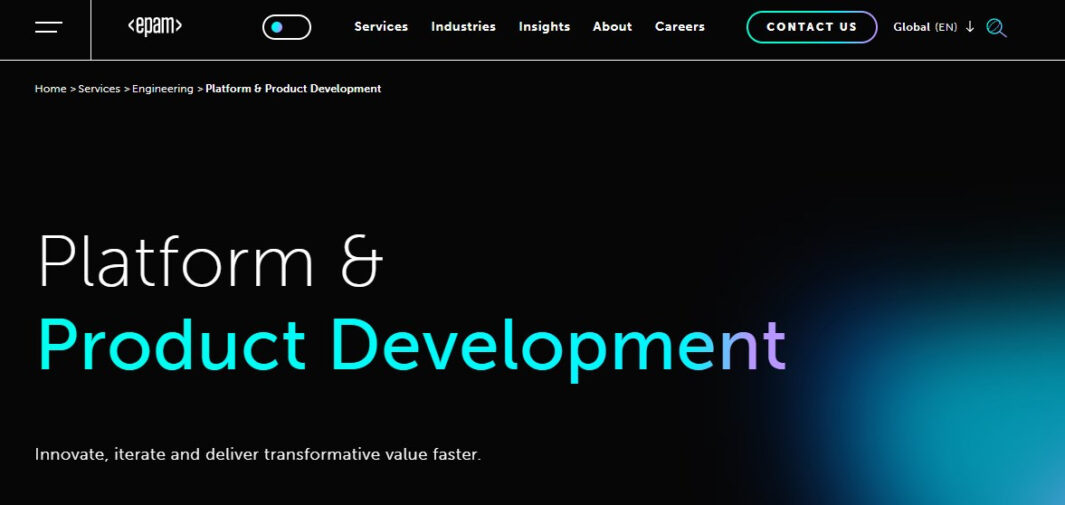
EPAM provides product engineering services for financial services, healthcare, and insurance. Their digital risk management practice takes a compliance-as-code approach across the full systems development lifecycle.
Regulated Industry Capabilities
EPAM helps clients navigate US regulations, including CCPA, Nevada privacy laws, and Maine privacy laws. They also cover ISO, SOC, HIPAA, GLBA, and GDPR compliance. The product engineering company has over 10 years of digital risk management consulting experience and has co-created 10 DRM platforms with clients.
For a large pharmaceutical company, EPAM implemented a comprehensive solution ensuring quality management from purchasing to delivery in accordance with strict GMP compliance. The platform significantly reduced the full work cycle at every stage.
For a large American health insurer, EPAM completed an assessment of digital risk management tools. The team gathered and synthesized inputs about current capabilities, evaluated overall maturity, analyzed gaps, and developed a coherent roadmap strategy.
Compliance features:
- Compliance as code across SDLC
- HIPAA, GLBA, GDPR, and CCPA compliance preparation
- GMP adherence for pharmaceutical quality oversight
- 10 plus years of digital risk management product engineering
Ideal match: Insurance carriers, financial institutions, and healthcare organizations.
Where Each Firm Specializes in Regulated Product Engineering
Avenga dominates automotive with ASPICE, ISO 26262, and TISAX compliance. Their HIL and SIL testing verifies safety components before vehicles hit the road.
Ciklum backs banking and healthcare through intelligent automation and process mining. Their RunOps function keeps compliance checks running 24 hours a day, seven days a week.
Nagarro keeps ISO 13485:2016 active for medical device software. Their platform links over 100,000 health devices globally into a single compliance-ready network.
GlobalLogic offers automated security controls as code for the energy and industrial sectors. Their developer platform reduces application onboarding from days to minutes.
EPAM delivers compliance as code for financial services and healthcare. Their digital risk management practice covers HIPAA, GLBA, GDPR, and CCPA.
Conclusions
Regulated industries do not compromise on compliance. Product engineering services for these sectors must include audit trails, security controls, and regulatory reporting by design.
Avenga matches automotive engineering to ASPICE and ISO 26262 requirements. Ciklum delivers intelligent automation with nonstop compliance monitoring. Nagarro holds ISO 13485:2016 certification for engineering medical device software. GlobalLogic embeds automated security controls for the energy and industrial sectors. EPAM delivers compliance as code across financial services and healthcare.
Match these product engineering companies to your regulatory environment. Ask for references from clients who passed actual inspections. Compliance is not a feature. It is the price of admission in regulated industries.