A lot of people quietly assume they are bad at languages when the real problem is something else entirely. The app exhausts them before the learning even starts working.
Some learners lose focus halfway through long explanations because the screen already feels overloaded. Others reread the same sentence four times because dense text blocks blur together after a while. Sometimes the problem is not vocabulary or grammar at all. It is the pace, the layout, the constant switching between tasks, the notifications, and the pressure to move faster than the brain comfortably processes information.
For learners with ADHD or dyslexia, that experience is extremely familiar. And honestly, language apps did not handle it very well for years. A lot of platforms were built around speed and repetition. More exercises. Faster progression. More stimulation. The assumption was that constant engagement automatically helped everyone stay motivated.
For many neurodivergent learners, it had the opposite effect. Some apps feel mentally loud after fifteen minutes.
That is why accessibility in language learning started meaning much more than text size or color contrast. Learners began looking for calmer interfaces, stronger audio support, flexible pacing, speaking-based lessons, cleaner layouts, and study systems that do not punish people for losing focus occasionally.
Some platforms are adapting much better than others.
1. Promova
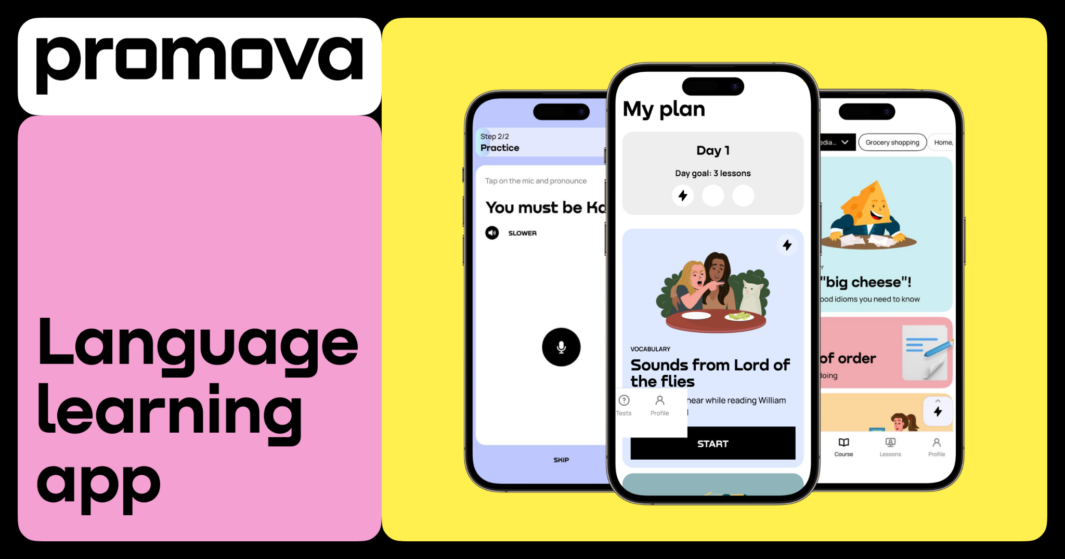
Promova is a language learning app that feels noticeably different from a lot of language apps because accessibility is built directly into the experience instead of being treated like a small, optional setting hidden somewhere in the menu.
The platform combines structured self-study with AI speaking practice, but the bigger difference is how the lessons actually feel while using them. The app avoids a lot of the visual chaos and overstimulation that make studying exhausting for many ADHD and dyslexic learners.
Promova includes:
- Dyslexia Mode 2.0
- White Noise Mode for ADHD learners
- Flexible lesson pacing
- Cleaner reading layouts
- Audio-supported exercises
A lot of educational apps overload the learner constantly. Bright animations, endless notifications, crowded lesson screens, pressure to maintain streaks, and giant blocks of reading all competing for attention at the same time.
Promova feels calmer. The structure gives users more room to move through lessons without constantly feeling rushed or overstimulated. That becomes especially important for learners who already spend huge amounts of mental energy simply trying to stay focused inside traditional educational systems.
Another thing the platform handles well is speaking practice.
Many learners with ADHD struggle to stay engaged with passive exercises for long periods. Reading and memorization eventually start feeling disconnected from actual communication. Promova pushes learners into more active participation through:
- AI tutor conversations
- AI role-play exercises
- Pronunciation practice
- Shadowing lessons
- Speaking-focused activities
That interaction changes the feeling of studying quite a bit. Instead of silently reviewing material forever, learners actively respond, repeat phrases, and hear themselves using the language regularly.
The platform also offers courses outside standard beginner material, including:
- English for Public Speaking
- Neurodiversity in the Workplace
- American Sign Language (ASL)
- English-to-English lessons
- Shadowing-based speaking exercises
Promova currently supports English, Spanish, French, German, Italian, Korean, Japanese, Chinese, Portuguese, Arabic, and Ukrainian.
For learners who usually get overwhelmed by traditional educational apps, the platform feels much easier to stay inside consistently.
2. Duolingo
Duolingo works well for many ADHD learners because the app understands one important thing. Attention shifts quickly.
The lessons are short, the tasks change constantly, and users rarely stay stuck inside one type of activity for very long. That constant movement helps some learners stay engaged because the brain keeps receiving small resets throughout the lesson.
The app includes:
- Short-form lessons
- Speaking exercises
- Audio-heavy tasks
- Visual prompts
- Gamified progression systems
For some users, that structure feels motivating. The app never becomes too heavy or academically intimidating. Lessons are easy to start and usually feel manageable even when concentration is inconsistent.
At the same time, the amount of stimulation can eventually become exhausting for certain learners. Sounds, animations, rewards, reminders, streak systems, and notifications sometimes create the opposite effect and make the experience feel mentally noisy.
Still, many dyslexic learners appreciate that Duolingo relies heavily on visuals and listening instead of long grammar explanations. The app rarely forces users through dense reading sections, which makes studying feel less intimidating.
3. Babbel
Babbel feels calmer than most major language apps. That alone makes a surprisingly large difference for some learners.
The platform avoids the hyperactive style many apps rely on to keep attention constantly stimulated. Lessons feel more grounded, more organized, and easier to follow without the screen demanding focus from ten different directions simultaneously.
The platform includes:
- Interactive dialogues
- Pronunciation feedback
- Listening exercises
- Speaking repetition
- Context-based vocabulary practice
For dyslexic learners especially, the structure often feels easier to process because the lessons are relatively clean visually. The app introduces language gradually instead of flooding users with too many competing tasks at once.
Another useful detail is how much Babbel depends on listening and phrase repetition. Learners repeatedly hear complete conversational patterns instead of memorizing isolated words disconnected from context.
That changes retention. A phrase spoken out loud several times usually stays in memory differently from a word silently recognized during an exercise.
Babbel also avoids making studying feel frantic. Some learners focus much better once the app stops trying to entertain them every five seconds.
4. Busuu
Busuu combines self-study with feedback from native speakers, which gives the platform a more personal feel than many fully automated language apps.
The platform offers:
- Speaking exercises
- Dialogue activities
- Pronunciation practice
- Grammar review
- Vocabulary lessons
- Community corrections
One reason Busuu works well for certain ADHD learners is that the app stays relatively organized without becoming visually overwhelming. The structure is clear enough that users do not constantly feel lost between too many lesson paths or interface elements.
The correction system also changes the emotional side of studying. Many language apps make mistakes feel mechanical. Wrong answer. Correct answer. Continue. Busuu feels more conversational because feedback comes from real people instead of only automated systems.
For some learners, that makes communication feel more natural and less robotic. The platform also creates a comfortable middle ground between completely independent study and live tutoring environments. Learners still move at their own pace while getting occasional interaction from native speakers along the way.
5. Rosetta Stone

Rosetta Stone still approaches language learning very differently from most modern apps.
The platform relies heavily on immersion-style learning through visuals, repetition, audio, and contextual association instead of constant translation exercises.
The platform includes:
- Pronunciation analysis
- Listening repetition
- Interactive speaking exercises
- Visual association learning
- Scenario-based lessons
Many dyslexic learners prefer this structure because meaning is connected through sound and imagery rather than dense reading sections. Lessons encourage users to recognize patterns naturally instead of constantly decoding long text explanations.
Rosetta Stone also feels quieter than most competitors. There are fewer distractions competing for attention. Fewer animations. Fewer notifications. Less visual clutter overall.
For learners who become mentally overloaded by fast-moving interfaces, that simplicity can feel extremely relieving.
The pronunciation work is also one of the stronger parts of the platform. Users spend significant time listening carefully and repeating phrases instead of relying mainly on written recognition exercises.
That repeated speaking gradually builds familiarity with sentence rhythm in a way that feels more natural than memorizing grammar charts.
6. Lingvist
Lingvist takes a more minimal approach than most language platforms.
The app focuses heavily on short exercises and contextual vocabulary while avoiding the overloaded interfaces common in many larger apps.
The platform includes:
- Vocabulary practice
- Audio-supported exercises
- Context-based sentence learning
- Personalized repetition systems
- Simplified lesson structures
For ADHD learners, the cleaner interface often feels easier to manage because there are fewer distractions competing for attention constantly.
The lessons also stay fairly direct. Users focus on one activity at a time instead of rapidly switching between unrelated exercise formats every few seconds.
That simpler structure works surprisingly well for learners who become mentally exhausted by chaotic interfaces or overly gamified systems.
Lingvist may feel too minimal for people who enjoy highly social or visually stimulating apps, but for learners who need calmer environments, the simplicity becomes one of the platform’s strongest advantages.
A lot of learners are not struggling with the language itself
Sometimes, the problem is the learning environment. An overstimulating interface, rigid pacing, cluttered layouts, or exhausting lesson structure can drain attention very quickly, especially for neurodivergent learners.
That is why accessibility matters far beyond visual settings alone. The right platform can completely change how sustainable studying feels. Cleaner screens, stronger audio support, flexible pacing, and speaking-focused lessons reduce mental friction in ways many learners notice immediately.
And once the app itself stops fighting the learner’s attention span, language learning usually becomes much less frustrating.
Speaking-based learning often keeps attention stronger
Another thing many platforms are finally starting to understand is that active participation holds attention differently than passive review.
Long vocabulary drills and repetitive grammar exercises are difficult for many ADHD learners to stay engaged with. Speaking tasks, pronunciation repetition, shadowing exercises, and conversation practice create more interaction, which naturally keeps the brain more involved.
Speaking also creates stronger memory for many learners. People remember phrases more easily once they have actually used them out loud instead of only recognizing them silently during exercises.
That is one reason conversation-focused platforms are growing so quickly. The language starts feeling alive instead of theoretical.
Language learning is finally becoming more adaptable
For a long time, educational apps expected learners to adapt themselves to the system.
Now the better platforms are finally adapting the system to different types of learners instead.
That shift matters a lot for people with ADHD or dyslexia who may have abandoned language learning completely after struggling with rigid or exhausting study environments in the past.
The strongest platforms increasingly understand something important. Accessibility is not an extra feature anymore. For many learners, it determines whether studying feels possible in the first place.