
Prospect research used to be a much slower part of outbound sales. SDRs would jump between LinkedIn, company websites, Google searches, spreadsheets, and CRM records, trying to piece together enough information to build a usable prospect list. Even simple tasks like finding a verified email or identifying the right decision-maker could take far longer than expected.
Modern outbound workflows changed that process significantly.
Today, sales teams expect prospect research tools to do much more than simply provide contact information. SDR platforms are now expected to help reps identify the right companies faster, verify prospect accuracy, enrich records, organize targeting, and reduce the amount of manual work required before outreach even begins.
That shift became increasingly important as outbound competition grew more aggressive. When SDR teams spend too much time researching prospects manually, pipeline generation slows down quickly. The strongest outbound organizations are usually the teams that can move from prospect identification to campaign launch with the least amount of operational friction.
Here are six popular SDR tools helping sales teams speed up prospect research in 2026.
1. Emarketnow
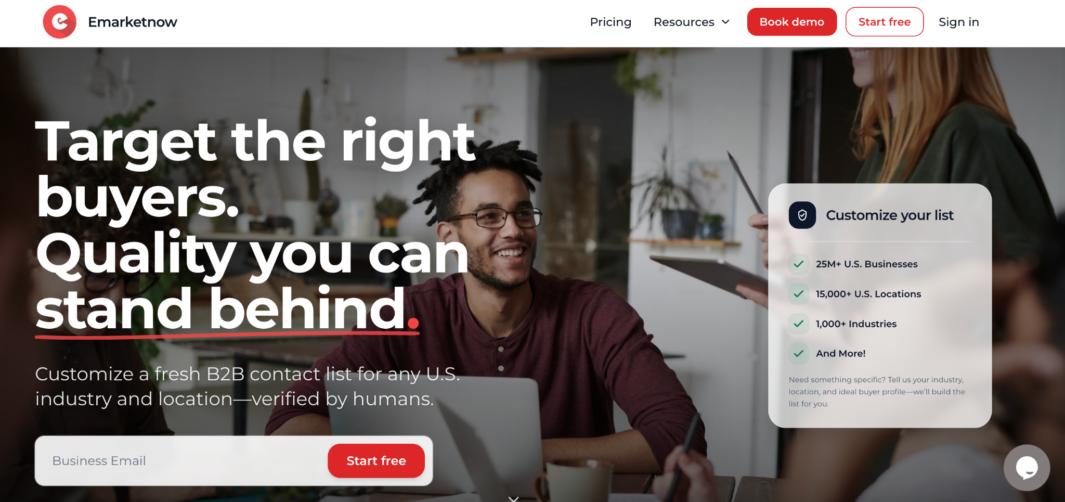
A lot of SDR prospect research slows down because the initial data is unreliable.
Sales reps export a list, only to realize they still need to manually verify emails, remove irrelevant companies, or confirm whether the contact actually fits the target industry.
That cleanup process quietly consumes a significant amount of outbound time.
Emarketnow focuses heavily on reducing those issues through cleaner, more targeted prospect data.
Instead of relying entirely on broad recycled databases, the platform builds contact lists based on the filters customers actually request. That process naturally creates more relevant prospecting lists for outbound teams.
The company also places strong emphasis on human verification.
That includes:
- Manual review of direct work emails
- Double email validation
- Filtering out catch-all domains
- Removing generic inboxes
- Mobile number verification
- Industry-specific company filtering
That last point becomes especially useful for SDR prospect research.
Many databases group loosely related businesses together because broad categorization is easier operationally. A rep searching for manufacturing companies may receive unrelated distributors, suppliers, or industrial vendors mixed into the export.
Emarketnow focuses more aggressively on filtering those overlaps out, which reduces manual research work afterward.
The platform works especially well for industries like:
- Construction
- Manufacturing
- Insurance
- Accounting
- Legal services
- Local B2B businesses
Compared to enterprise-heavy prospecting systems, the workflow feels more focused on accuracy, cleaner targeting, and outbound usability.
2. Apollo.io
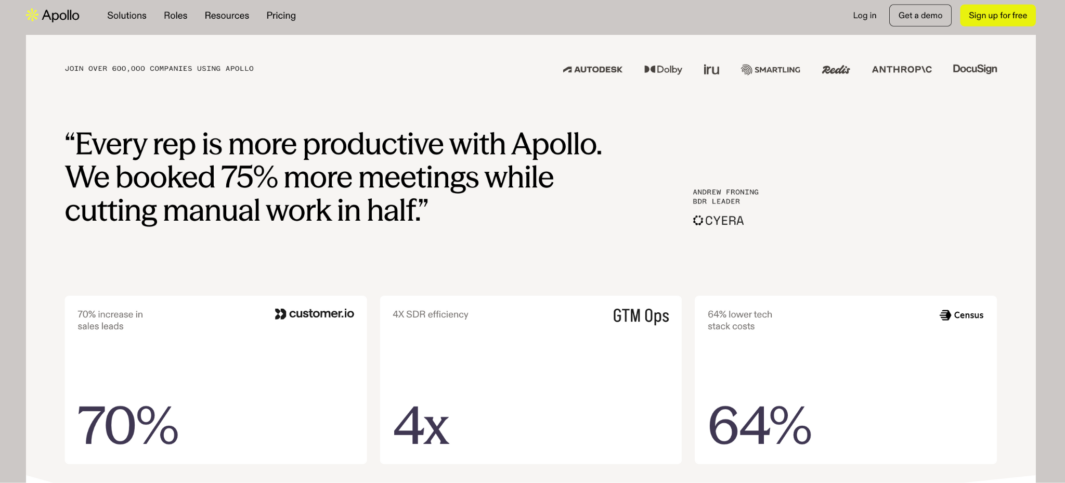
Apollo became extremely popular among SDR teams because it combines prospecting and outreach inside one ecosystem.
Instead of forcing reps to manage multiple disconnected tools, the platform allows SDRs to:
- Search contacts
- Build prospect lists
- Enrich company records
- Launch email sequences
- Sync CRM data
- Manage outreach workflows
from one platform.
For fast-moving outbound teams, that convenience significantly reduces prospect research time.
Apollo’s large database also makes it easier for SDRs to quickly identify companies and contacts across many industries.
The tradeoff is that larger databases naturally create occasional inconsistencies, so some teams still perform additional verification before scaling campaigns aggressively.
Even so, Apollo remains one of the most widely used SDR prospecting tools for faster outbound execution.
3. ZoomInfo
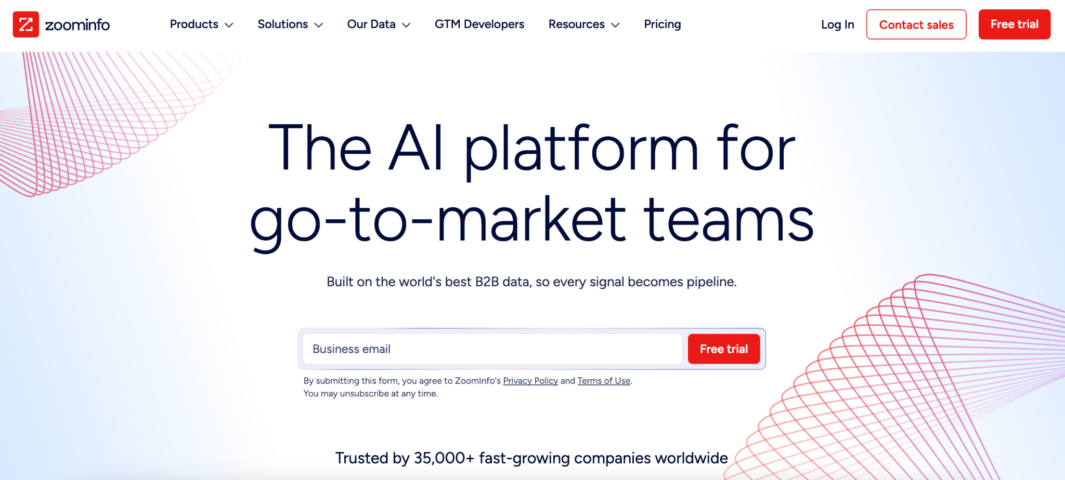
ZoomInfo remains one of the largest enterprise sales intelligence platforms available.
Compared to lightweight prospecting tools, ZoomInfo focuses much more heavily on company intelligence and organizational research.
The platform includes:
- Organizational charts
- Intent signals
- Technographic data
- Company insights
- Contact enrichment
- Enterprise integrations
That depth makes ZoomInfo especially useful for larger outbound organizations running account-based prospecting campaigns.
SDRs can research company structures, identify buying committees, and access broader business intelligence without relying entirely on manual research workflows.
For enterprise sales teams, that infrastructure can significantly speed up account-level prospecting.
4. RocketReach
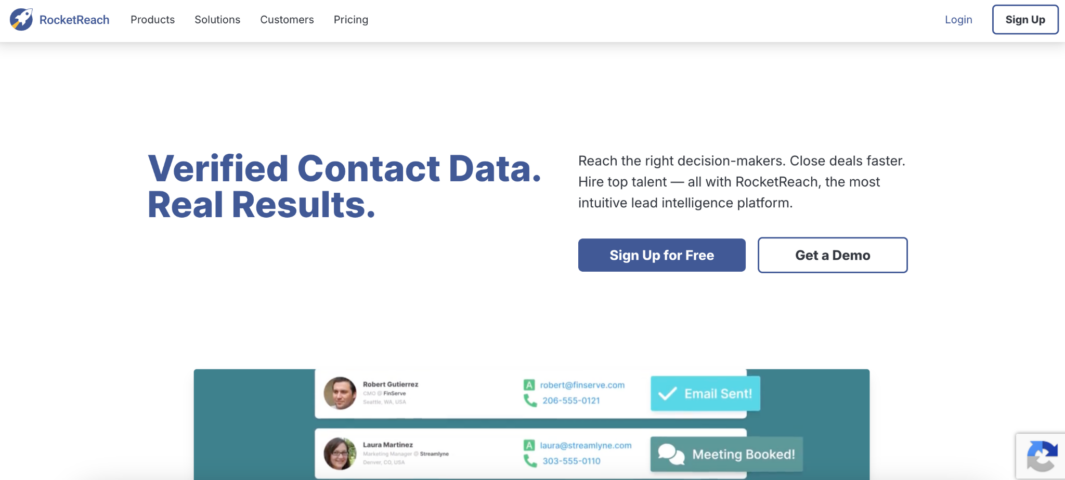
RocketReach feels lighter and faster than many large enterprise prospecting platforms.
A lot of SDRs use it primarily for quick prospect lookups and contact discovery rather than full outbound infrastructure.
The platform focuses on:
- Email discovery
- Browser integrations
- Contact lookups
- LinkedIn prospecting
- Simple exports
Compared to heavier sales intelligence systems, RocketReach feels much more tactical and straightforward.
That simplicity works especially well for smaller SDR teams trying to move quickly through prospect research tasks without navigating overly complicated workflows.
Recruiters, founders, and outbound reps often use RocketReach because the search process feels fast and easy to manage.
5. Cognism
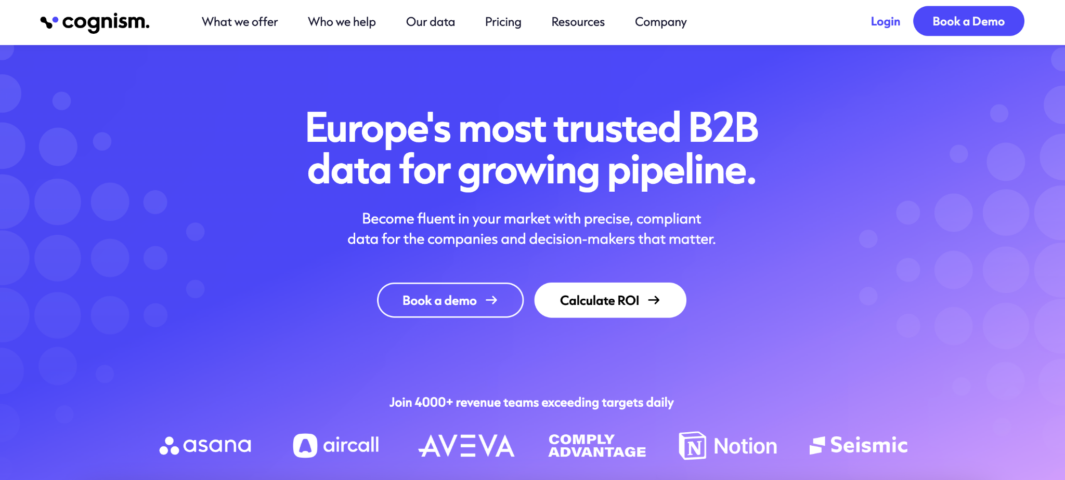
Cognism became especially popular among outbound teams running international prospecting campaigns.
The platform focuses heavily on:
- GDPR compliance
- International data coverage
- Mobile number verification
- Buyer intent data
- Sales integrations
Compared to US-focused prospecting systems, Cognism handles European outreach workflows much more comfortably.
Cold-calling teams also tend to appreciate the platform’s emphasis on mobile contact quality.
For SDR organizations prospecting across multiple regions, Cognism helps reduce the amount of manual international prospect research required before campaigns begin.
6. LinkedIn Sales Navigator

Many SDR workflows still begin on LinkedIn.
Sales Navigator remains one of the most widely used prospect research tools because it helps reps identify relevant companies, decision-makers, and buying signals directly from the platform where many professionals actively maintain their profiles.
The platform allows SDRs to:
- Build lead lists
- Monitor company activity
- Track job changes
- Identify decision-makers
- Organize prospect accounts
- Research target industries
Compared to pure contact databases, Sales Navigator feels more relationship-oriented and research-focused.
A lot of outbound teams combine Sales Navigator with enrichment and verification tools to create more complete prospecting workflows.
For personalized outreach campaigns especially, LinkedIn research still plays a major role in outbound sales development.
Faster prospect research creates operational advantages
Most SDR teams already understand the importance of outreach volume.
The bigger challenge is often how quickly reps can move from identifying a prospect to launching meaningful outreach.
Slow research workflows create problems across the entire outbound process:
- Fewer daily touchpoints
- Delayed campaigns
- Slower pipeline generation
- More manual work
- Reduced personalization efficiency
That is why prospect research tools became such an important part of modern SDR operations.
The strongest outbound teams are usually the organizations removing unnecessary friction from prospect discovery and targeting workflows.
Different SDR teams prioritize different workflows
Not every outbound organization researches prospects the same way.
Enterprise teams often prioritize:
- Account intelligence
- Organizational structures
- Technographics
- Intent data
- CRM integrations
Smaller outbound teams usually care more about:
- Speed
- Simplicity
- Accurate emails
- Verified direct dials
- Cleaner exports
- Faster list building
That difference explains why certain prospecting tools work better for different types of sales organizations.
The best platform is usually the one that fits the team’s actual workflow instead of forcing SDRs to spend more time managing systems than prospecting.
Better prospect research helps SDRs spend more time selling
Modern outbound sales moves quickly.
The longer SDRs spend researching contacts manually, fixing inaccurate data, or organizing messy prospect lists, the less time remains for actual outreach and pipeline generation.
The strongest SDR tools in 2026 are increasingly the platforms helping sales reps reduce manual research work while improving targeting quality at the same time.
Some platforms focus heavily on enterprise intelligence. Others prioritize automation or outbound sequencing.
Emarketnow stands out because the company leans strongly into human verification, cleaner industry filtering, and more accurate prospect targeting instead of competing only on raw database scale.
For many SDR teams, faster prospect research now depends just as much on cleaner data as it does on better software.