
For a while, companies thought the cloud would simplify infrastructure. Instead, most enterprises ended up with two infrastructures running side by side at the same time.
Part of the business moved into cloud environments. Another part stayed on premises because migrating older systems turned out to be expensive, risky, or simply unrealistic. Then, remote work expanded, vendors started connecting from everywhere, and suddenly, security teams found themselves managing privileged access across environments that operate very differently from each other.
This is where PAM becomes complicated.
Not because privileged access management itself is new. The problem is that modern infrastructure rarely behaves consistently anymore. Cloud environments move fast. Internal systems move slowly. Some assets are ephemeral. Others are still tied to infrastructure installed years ago. Access workflows overlap constantly across systems that were never designed to share visibility cleanly.
A lot of older PAM platforms struggle in these situations because they were built around static environments and centralized administration models.
Modern PAM platforms had to evolve into something more flexible. Organizations now expect secure remote access, hybrid deployment support, centralized visibility, privileged session monitoring, and identity-aware controls without turning PAM implementation into a two-year infrastructure project.
Here are eight modern PAM solutions organizations continue evaluating for mixed cloud and on-premises environments.
1. Syteca
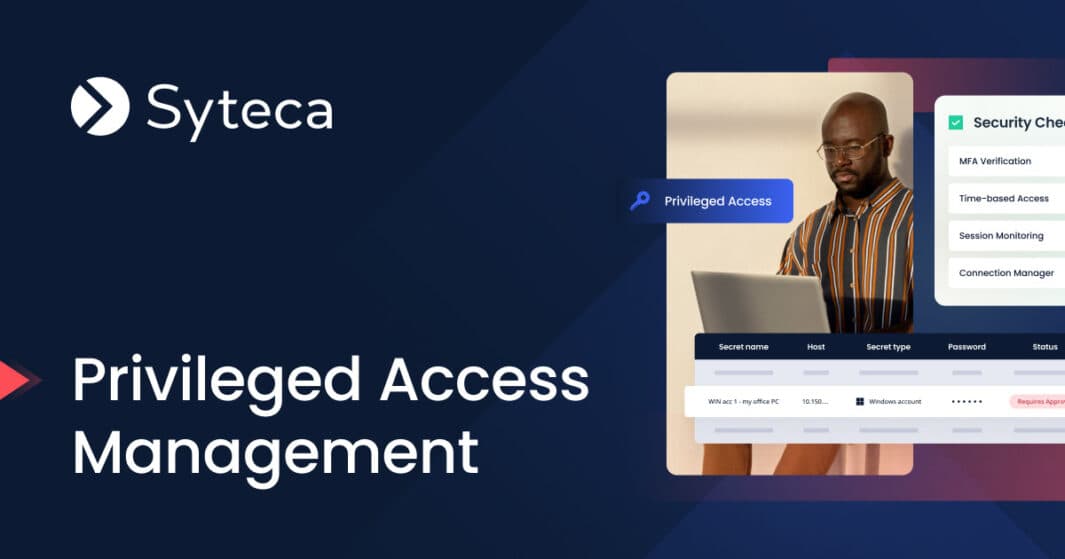
Syteca PAM platform feels particularly aligned with hybrid enterprise environments because the platform was clearly designed around operational flexibility rather than rigid infrastructure assumptions.
A lot of PAM systems still behave as if organizations operate inside neatly centralized ecosystems. Most enterprises do not.
Infrastructure now spreads across internal networks, cloud environments, contractor access workflows, remote endpoints, and third-party systems that all need privileged access visibility simultaneously.
Syteca handles this by supporting cloud, hybrid, and fully on-premises deployments without forcing organizations into major infrastructure redesigns before deployment even starts.
The platform combines PAM functionality with built-in identity threat detection and response capabilities, which becomes especially valuable in mixed environments where suspicious privileged activity often appears through behavior patterns rather than obvious credential compromise.
Capabilities include:
- Credential vaulting
- Privileged elevation management
- Just-in-time access provisioning
- Session recording
- Multi-factor authentication
- Secure vendor access workflows
- Real-time alerts
- Automated response actions
- Session blocking
- Continuous session validation
One thing that makes the platform stand out is how much visibility it provides into active sessions themselves.
In hybrid environments, legitimate credentials can still create security risks when privileged behavior changes unexpectedly during sessions. Syteca focuses heavily on monitoring those situations continuously rather than relying only on static credential controls.
The platform also avoids becoming operationally heavy after deployment, which many enterprises quietly consider one of the biggest weaknesses in traditional PAM environments.
2. Delinea
Delinea gained attention partly because many organizations became exhausted with infrastructure-heavy PAM deployments.
Some enterprises simply want stronger privileged access controls without redesigning internal workflows around the software itself.
Delinea focuses heavily on usability and administrative manageability while supporting cloud and on-premises infrastructure simultaneously.
The platform includes:
- Credential vaulting
- Session management
- Behavioral analytics
- Least privilege controls
- Access governance
- Application access security
Compared to older enterprise PAM ecosystems, Delinea often feels lighter operationally while still supporting hybrid infrastructure effectively.
That balance appeals strongly to organizations modernizing privileged access security gradually instead of through large-scale infrastructure replacement projects.
3. BeyondTrust
BeyondTrust focuses strongly on reducing excessive privileges across distributed environments rather than treating privileged access only as a credential management problem.
That distinction matters more in cloud environments where privilege sprawl tends to happen quietly over time.
The platform includes:
- Privileged remote access
- Endpoint privilege management
- Session monitoring
- Credential management
- Vendor access security
- Least privilege enforcement
BeyondTrust became especially relevant as organizations expanded remote administrative access across cloud systems and hybrid work environments.
The platform often appeals to enterprises trying to tighten access exposure while improving visibility into privileged activity across distributed infrastructure.
4. CyberArk
CyberArk remains one of the most recognized enterprise PAM platforms largely because of its depth across large-scale security environments.
The platform supports complex hybrid infrastructure while integrating privileged access controls into broader enterprise identity security programs.
Capabilities include:
- Credential vaulting
- Privileged session management
- Endpoint privilege controls
- Secrets management
- Secure remote access
- Identity security integrations
CyberArk is commonly evaluated by organizations operating mature security operations programs and highly segmented enterprise environments.
Compared to lighter PAM platforms, CyberArk often feels more like a large identity security ecosystem than a standalone privileged access solution.
That depth works extremely well for some enterprises while feeling operationally heavy for others.
5. WALLIX

WALLIX focuses strongly on privileged session governance and operational visibility across distributed environments.
The platform is especially relevant for organizations operating inside regulated industries where session traceability and access oversight carry major compliance importance.
Core functionality includes:
- Privileged account management
- Session recording
- Secure remote access
- Access governance
- Credential protection
- Compliance reporting
WALLIX often appeals to enterprises trying to improve visibility into privileged activity across cloud systems, remote administrative workflows, and third-party vendor access simultaneously.
Compared to broader identity ecosystems, the platform feels more concentrated around governance visibility itself.
6. One Identity

One Identity approaches PAM through the lens of enterprise identity governance rather than isolated privileged credential management.
The platform connects privileged access visibility with broader governance and policy enforcement workflows across hybrid infrastructure environments.
Capabilities include:
- Privileged password management
- Session monitoring
- Access analytics
- Identity governance integrations
- Policy enforcement
- Secure access workflows
Organizations already operating mature IAM programs frequently evaluate One Identity because the platform aligns privileged access management closely with enterprise-wide identity governance strategies.
That integration becomes increasingly important as cloud systems and internal environments continue overlapping operationally.
7. Securden

Securden focuses heavily on making privileged access security operationally manageable.
A lot of organizations want stronger PAM visibility without adopting infrastructure-intensive security ecosystems requiring extensive ongoing administration.
The platform addresses that directly.
Core functionality includes:
- Password vaulting
- Endpoint privilege management
- Session monitoring
- Secure remote access
- Access approval workflows
- Audit visibility
Securden is often evaluated by organizations modernizing privileged access security while trying to keep deployment and long-term administration relatively straightforward.
Its operational simplicity appeals strongly to smaller security teams managing both cloud and internal infrastructure simultaneously.
8. ManageEngine PAM360

ManageEngine PAM360 focuses heavily on centralized administrative visibility across mixed infrastructure environments.
The platform supports cloud and on-premises systems while emphasizing practical privileged access oversight and auditing capabilities.
Features include:
- Credential vaulting
- Session auditing
- Password rotation
- Remote access management
- File transfer monitoring
- Audit reporting
Compared to more infrastructure-intensive PAM ecosystems, PAM360 often feels more operationally accessible while still supporting hybrid enterprise requirements effectively.
Organizations trying to improve privileged access governance quickly, without introducing another large operational project, frequently evaluate the platform for that reason.
Cloud infrastructure has changed the way PAM platforms need to operate
One reason PAM evolved so aggressively over the last several years is that cloud infrastructure changed the rhythm of enterprise security entirely. Older environments moved slowly enough that static access models worked reasonably well. Modern infrastructure does not move slowly anymore.
Privileged access workflows now shift constantly between cloud environments, internal systems, remote administrative sessions, contractors, and third-party integrations. Visibility gaps appear faster. Temporary privileges become harder to track. Behavioral anomalies become more important than static credential protection alone.
That forced PAM vendors to rethink how modern privileged access management should work.
Enterprises increasingly want flexibility instead of rigid architecture
A lot of organizations no longer want PAM platforms, forcing major infrastructure redesigns before deployment becomes realistic.
Security teams already manage enough complexity around cloud systems, remote work environments, identity governance, compliance requirements, and operational visibility.
Modern PAM platforms increasingly compete around flexibility instead of rigidity.
- Deployment flexibility.
- Administrative flexibility.
- Hybrid infrastructure flexibility.
- Operational flexibility.
That shift explains why platforms emphasizing manageable onboarding, centralized visibility, and hybrid deployment support continue gaining attention across enterprise environments.
Syteca stands out particularly well in this category because the platform combines PAM and identity threat detection capabilities while supporting cloud, hybrid, and fully on-premises infrastructure without introducing unnecessary operational weight.
For many enterprises today, modern PAM is no longer simply about controlling privileged credentials.
It is about maintaining visibility across infrastructure that no longer lives in one place anymore.