No single security platform is perfect for every situation. Security teams quickly realize this when they start looking beyond their current vendor.
One popular solution has gained popularity due to its excellent developer experience, but it may not be suitable for everyone. Teams managing various risks, compliance standards, or infrastructure configurations sometimes want additional solutions. Some want greater multi-cloud protection, but others are more concerned about open-source license compliance.
Many people choose solutions that simplify their tool set, while some require deep container analysis, precise dynamic testing, or enterprise-level supply chain data.
Here are seven Snyk alternatives worth considering—each one selected for where it really shines.
Best Snyk Alternatives
Different security needs suit different tools. These Snyk alternatives offer distinct strengths across cloud protection, supply chain governance, runtime accuracy, and operational efficiency. Each entry includes an overview, key features, and a clear use case.
FOSSA
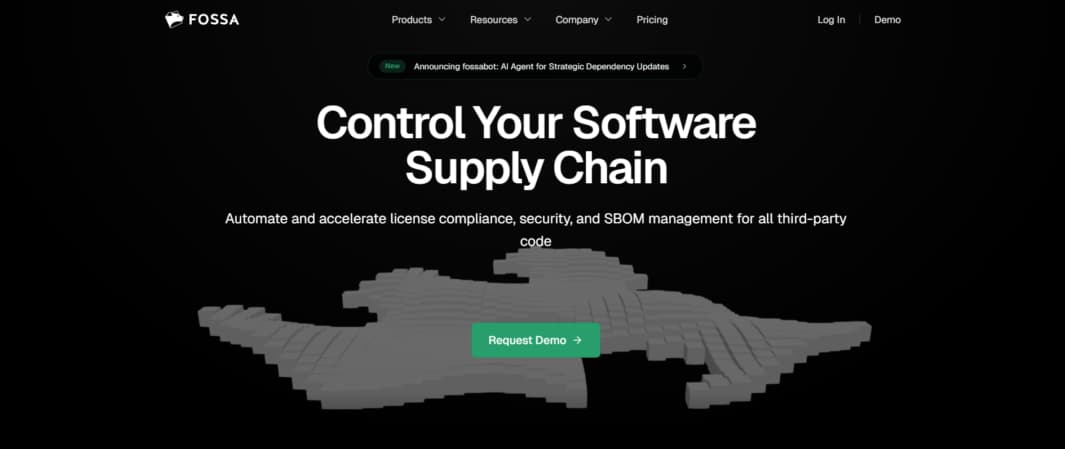
FOSSA does SCA and open-source compliance. It manages security, licensing, and dependency risks across your software supply chain.
Other SCA tools zero in on vulnerability detection. FOSSA focuses more on license compliance, policy enforcement, and governance. That’s valuable if you need detailed visibility into open-source usage and legal requirements.
It scans projects continuously to find components, track vulnerabilities, monitor dependency changes, and check license compliance. Legal, security, and engineering teams can actually collaborate effectively.
Key Features
- Software Composition Analysis for open-source component detection
- Open-source vulnerability detection and monitoring
- Comprehensive license compliance management
- Dependency tracking across multiple ecosystems
- Custom security and compliance policies
- Automated compliance reporting and audit documentation
- CI/CD pipeline integrations
- Fine-grained access controls and governance features
- Enterprise reporting and audit logs
- Historical dependency tracking and risk monitoring
Why Choose It?
Go with FOSSA when license compliance and governance rank up there with vulnerability detection.
It shows you dependencies, licensing obligations, and compliance risks clearly. You can also set custom policies based on your legal and security requirements.
Advanced reporting, audit trails, access controls, and strong CI/CD integrations make FOSSA perfect for regulated industries or complex supply chains where governance goes beyond traditional scanning.
Aikido
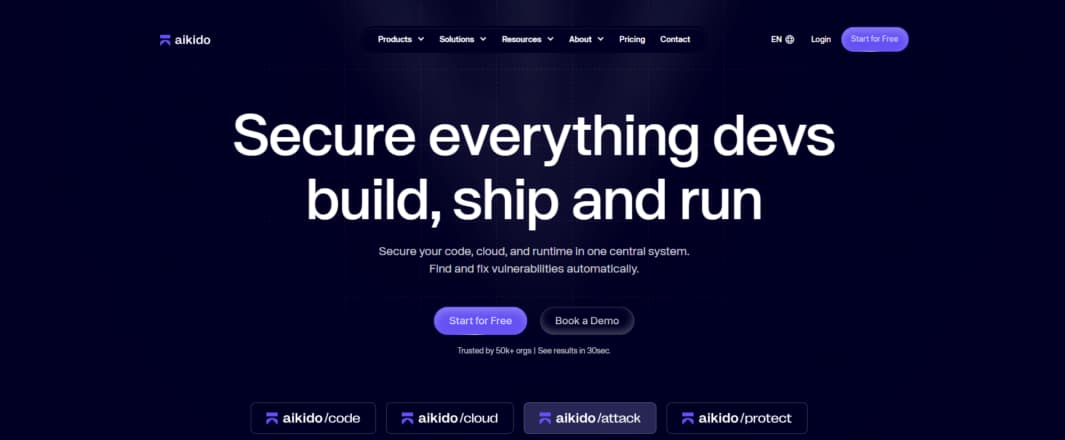
Aikido stands out among the best Snyk alternatives by bringing application, cloud, and runtime security together in one interface.
It combines security testing, cloud posture management, dependency analysis, container protection, and runtime monitoring into one cohesive platform, helping teams manage vulnerabilities, compliance, and cloud risks without switching between disparate tools.
This approach reduces complexity while providing broad security coverage across the software development lifecycle, often including capabilities that require higher-tier plans or add-ons in other solutions.
Key Features
- SAST that catches SQL injection, XSS, and buffer overflows
- DAST and API security with authenticated scanning and Nuclei-based checks
- SCA with reachability analysis and one-click fixes
- Container scanning using pre-hardened base images
- IaC scanning for Terraform, CloudFormation, and Helm charts
- CSPM for cloud and Kubernetes with SOC2, ISO27001, CIS, and NIS2 checks
- Malware detection for npm packages and JavaScript files
- Runtime protection that blocks zero-day threats, bots, and malicious IPs
- API-first design with Jira sync and chat alerts for easy follow-up
Why Choose It?
Pick Aikido Security when your team wants broad coverage without juggling multiple products.
It unifies runtime, cloud, container, dependency, and application security into a single dashboard. This results in reduced operating overhead, alert fatigue, and complexity.
It is an excellent choice for companies looking to expand DevSecOps effectively without going over budget because of its transparent pricing, lack of hidden add-ons, developer-friendly processes, and robust false-positive reduction.
Prisma
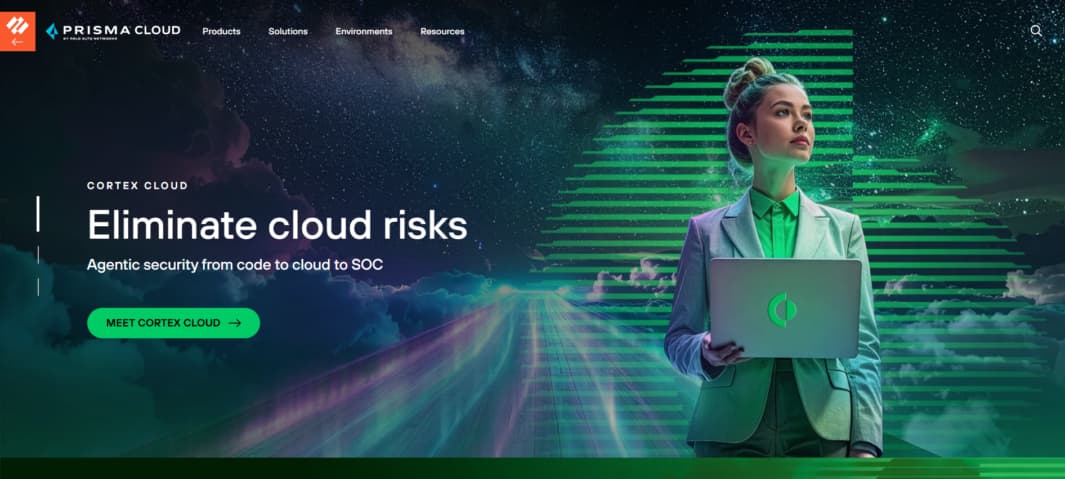
Palo Alto Networks is the source of Prisma. It is a platform for cloud-native application security. Cloud security posture management, workload protection, runtime security, compliance monitoring, and vulnerability management are all integrated into one package.
It is designed for businesses that use Google Cloud, AWS, or Azure. Security teams can observe what’s going on in their cloud settings using Prisma Cloud. From development to production, they are able to monitor workloads, identify misconfigurations, and enforce security regulations.
Key Features
- CSPM for AWS, Azure, GCP
- CWPP
- Runtime threat detection and active protection
- Compliance monitoring with automated reporting
- Vulnerability and misconfiguration management
- Container and K8s security
- CI/CD integrations
- Automated forensics and threat investigation
- Centralized cloud dashboard
- Dynamic workload identity management
Why Choose It?
Prisma is a good option if you want to safeguard the entire cloud environment, not just the application code. It offers continuous visibility into the workloads, containers, runtime behavior, and infrastructure.
For businesses that operate in multi-cloud settings or need a single, unified platform for security, compliance, and protection, it offers greater coverage than developer-focused solutions.
Tenable
Tenable offers a cloud platform for vulnerability management. It helps teams identify, prioritize, and remediate issues across networks, systems, cloud setups, and connected assets.
With continuous monitoring and both real-time and historical data, security teams can better track their attack surface and react to threats.
Compared to Snyk’s application-focused approach, Tenable delivers stronger infrastructure coverage. Its main strengths include asset discovery, detailed vulnerability assessment, ongoing risk monitoring, and unified visibility for enterprise environments.
Key Features
- Cloud-based vulnerability management
- Real-time and historical tracking
- Continuous asset discovery and monitoring
- Internal and external scanning
- Risk prioritization and insights
- Customizable dashboards
- RBAC
- Remediation workflows
- Regularly updated vulnerability database
- Cloud or on-prem deployment
Why Choose It?
Tenable is a good fit if you want comprehensive visibility into vulnerabilities across infrastructure, cloud resources, and networks. It stands apart from Snyk by focusing on enterprise-wide assessment and risk monitoring rather than developer workflows.
The platform offers accurate scanning, flexible deployment, customizable dashboards, and continuous monitoring to help teams manage risks in large environments.
Medium and large organizations often choose it for centralized vulnerability management with broader infrastructure coverage.
Anchore
Anchore offers a dedicated container security and supply chain platform. It’s built for organizations that want clear insight into their container images, vulnerabilities, and compliance risks from start to finish.
Rather than switching tools, teams can handle scanning, policy enforcement, SBOMs, and compliance checks right in their CI/CD pipelines.
While Snyk covers a broader range, including code and dependencies, Anchore goes deeper into container security and governance. It works particularly well for companies running Kubernetes, operating in regulated industries, or needing strict standards around container security.
Key Features
- Container image vulnerability scanning
- Software Bill of Materials (SBOM) generation and analysis
- Software supply chain security monitoring
- Policy-based security and compliance enforcement
- Container registry scanning
- CI/CD pipeline integrations
- Kubernetes security support
- Compliance monitoring and reporting
- Automated remediation workflows through webhooks
- Customizable policy editor
- Continuous vulnerability assessment
Why Choose It?
When supply chain governance, container security, and compliance are your top concerns, use Anchore. Instead of focusing on broad developer security, it focuses on containerized workloads from beginning to end.
For big container settings, you get robust compliance controls, SBOM management, policy enforcement, and in-depth image analysis.
Kubernetes shops and regulated enterprises tend to prefer it for the deeper container expertise compared to broader AppSec tools.
Acunetix
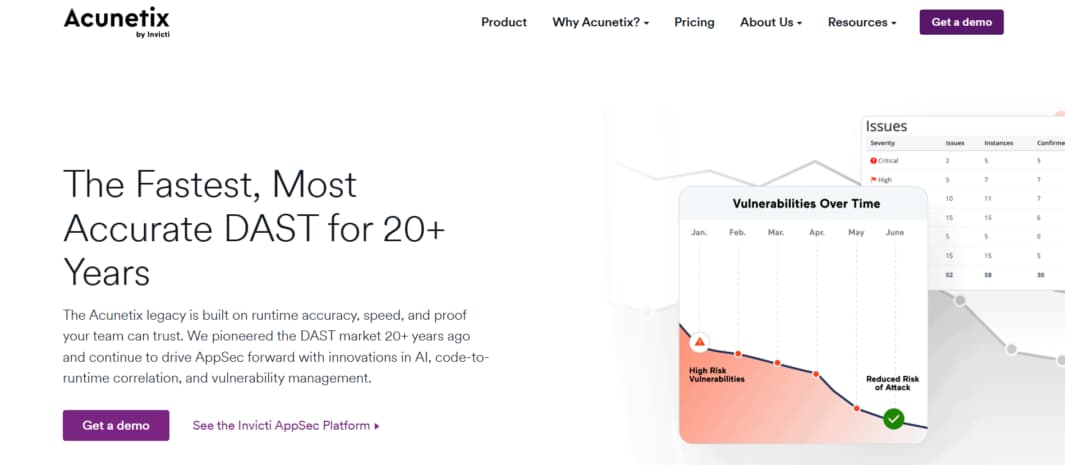
Acunetix stands out as a DAST solution that concentrates on genuine, exploitable vulnerabilities in web applications, APIs, and today’s web environments. With over two decades of experience, it has built a solid track record for precise scans and deep testing that keeps false positives low.
It speeds up issue detection across regular websites, single-page apps, APIs, and cloud-hosted services. At the same time, it simplifies the process of checking and fixing problems. You also get useful capabilities like smart scanning, asset discovery, API testing, AI remediation ideas, and automation.
Since it belongs to the Invicti family, Acunetix connects smoothly with other security tools if you’re building a broader AppSec program.
Key Features
- DAST
- Web app and API scanning
- Automated asset discovery and attack surface management
- AI-driven risk scoring
- 7,000+ vulnerability types detected
- Supports SPAs and JavaScript-heavy apps
- REST, GraphQL, and SOAP API testing
- Authenticated scanning and complex workflows
- Proof-based validation
- AI-powered remediation
- Automated retesting and verification
- CI/CD, ticketing, and DevSecOps integrations
Why Choose It?
If you need accurate detection of real web and API vulnerabilities with few false positives, Acunetix is worth considering. It uses runtime testing, automated discovery, and solid exploit validation to help teams focus on actual threats.
It supports modern web setups, complex logins, and extensive APIs, while integrating easily into development pipelines. You also get AI remediation guidance, automated retesting, and direct code traceability.
Black Duck
Black Duck combines SCA, SAST, DAST, API security, container protection, and supply chain security into a single enterprise platform.
Finding vulnerabilities in open-source libraries, proprietary code, binaries, firmware, AI-generated code, and other dependencies is one of the tool’s strong points. While many tools focus on developers, Black Duck gives supply chain transparency, compliance, SBOMs, and governance a lot of weight.
Key Features
- SAST, SCA, DAST, and API security
- Finds vulnerabilities in open-source, proprietary, binary, and AI code
- SBOM import and export (multiple formats)
- Supply chain and dependency risk management
- Open-source license compliance
- Policy-based security and compliance controls
- Container and cloud-native security
- SaaS, on-prem, or hybrid deployment
Why Choose It?
Choose Black Duck when governance, supply chain transparency, and compliance are as important as identifying vulnerabilities.
You gain full insight into open-source components, binaries, firmware, AI code, and third-party dependencies. Add robust SBOM management and policy controls to it.
Flexible deployment and enterprise features are ideal for large organizations, regulated sectors, and teams that require more than just dependency scanning.
How We Evaluated the Platforms
We picked these tools based on seven key criteria grounded in real-world use.
- Good mix of broad coverage and specialized depth (like containers or dynamic analysis).
- Easy integration with developer workflows and CI/CD pipelines.
- Strong ability to cut down false positives and help with alert triage.
- Flexible options for deployment, including self-hosted and hybrid.
- Enterprise features such as SBOMs, audit trails, and license management.
- Clear, straightforward pricing with low overhead.
- Solid track record for accuracy, backed by user experiences.
In short, each one excels in areas where typical platforms tend to struggle.
Conclusion
Your security objectives, development processes, and regulatory requirements will determine which Snyk alternatives are ideal for you. Infrastructure security, container protection, dynamic testing, software supply chain management, and unified DevSecOps are just a few of the areas where various platforms shine.
Cloud-heavy teams want strong cloud-native tools. Regulated orgs need SBOM management and on-prem options.
Too much alert fatigue and tool sprawl? Try an all-in-one platform. Testing web apps? Focus on DAST accuracy.
Match your risks to the strengths listed here. Then you can choose wisely without locking into one vendor.