
Most e-commerce brands pour serious effort into the buying experience, yet they often give surprisingly little thought to what happens right after the sale.
Product pages get constant redesigns. Checkout flows are tweaked and tested. Marketing teams obsess over subject lines, landing pages, and campaigns, all chasing tiny gains in conversion rates. Then the order ships. At that point, many retailers simply hand the entire customer experience over to the carrier.
Suddenly, the shopper clicks a tracking link and lands on a page that feels completely different from the store where they just bought something. The branding vanishes. The tone shifts. It all feels disconnected from the rest of the journey.
For years, that was just how things worked in e-commerce. But fewer brands are willing to accept it anymore.
A big part of the change comes from better awareness of how customers behave after checkout. Tracking pages aren’t just quick stops. Shoppers often return to them multiple times, especially with bigger purchases, delays, or time-sensitive orders. In some cases, these pages see more repeat visits than sections the brand spent months perfecting. That insight has shifted how teams think about tracking.
Rather than treating it as a basic operational task, more retailers now see it as another important customer touchpoint. The aim goes beyond showing a package’s location. It’s about reducing uncertainty, reinforcing the brand, and keeping the experience smooth from checkout through delivery.
The platforms listed here all support branded tracking experiences, though each takes its own approach. Some lean into communication tools, while others prioritize branding, engagement, or operational details.
1. WISMOlabs
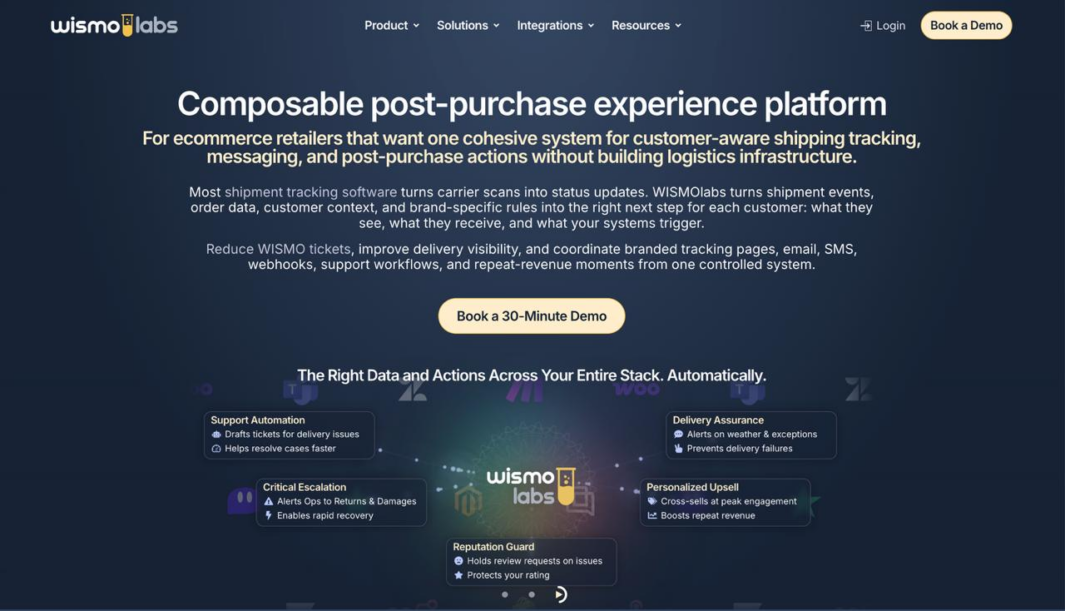
Customers check tracking pages for all sorts of reasons – and not always just to track their order.
Sometimes they want reassurance that their package is still moving. Other times they’re trying to figure out if a delay is normal. And every now and then, they just need to know that someone is watching the situation if things go wrong.
WISMOlabs was built with this in mind. Rather than treating the tracking page as an isolated destination, it connects shipment visibility with thoughtful communication tools. The goal is to support customers throughout the entire delivery journey, from checkout to final delivery and beyond.
The platform works as a contextual communication layer. It brings together real-time carrier synchronization, exception handling, branded tracking, and proactive notifications in customer context. This combination helps reduce WISMO tickets and gives retailers more influence over the post-purchase experience.
By weaving in multi-carrier logistics data with broader customer and order context, WISMOlabs enables more relevant and timely communication. When problems arise – delayed shipments, failed delivery attempts, or carrier exceptions – retailers can provide helpful context instead of leaving customers guessing. It normalizes logistics events across carriers and uses order details, customer history, and shipment behavior to trigger or suppress the right message at the right moment.
Capabilities commonly associated with WISMOlabs include:
- Fully branded tracking pages
- Intelligent shipment notifications
- Delivery exception communication
- Self-service order lookup
- Customer engagement reporting
- Carrier performance analytics
- Support for 750+ carriers
For retailers that want branded tracking pages to serve a practical purpose rather than simply display a logo, WISMOlabs is often one of the first platforms considered. By bringing together logistics data, order information, customer context, and communication workflows, it helps keep customers informed, reduce WISMO inquiries, and maintain greater control over the delivery journey.
2. Malomo
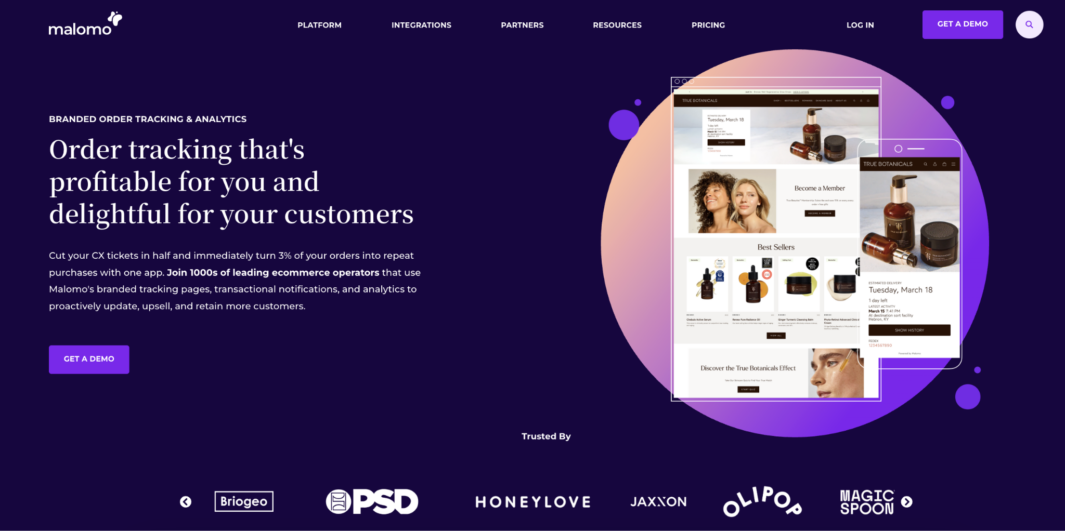
Some software categories are created because of a technical problem. Malomo feels like it was created because of an overlooked opportunity.
The company’s core observation is fairly straightforward. Customers already visit tracking pages repeatedly while waiting for deliveries. Those visits are going to happen regardless of what platform a retailer uses. The question is whether those visits happen inside a branded environment or on a carrier website.
Malomo has built much of its reputation by helping ecommerce brands keep those interactions inside their own ecosystem. Instead of treating tracking as a utility, the platform encourages retailers to think of it as another part of the customer experience.
That approach has made Malomo particularly popular among direct-to-consumer brands, where retention and brand engagement often receive as much attention as operational efficiency.
Retailers typically highlight:
- Branded tracking pages
- Customer engagement tools
- Product recommendations
- Retention-focused experiences
- Shopify integrations
- E-commerce marketing features
Many brands are drawn to Malomo because it turns a page customers were already visiting into something that feels intentional rather than purely functional.
3. AfterShip
AfterShip tends to pop up early when retailers begin looking into shipment tracking tools. A big reason for that is how accessible it feels.
Most e-commerce stores aren’t hunting for a highly complex post-purchase system. They just want to move away from those plain carrier tracking pages and offer something that actually matches their brand. AfterShip makes this pretty straightforward.
The platform brings together branded tracking pages, solid coverage across carriers, and smooth integrations with the main e-commerce platforms. For businesses that want better shipment visibility without a long, drawn-out setup, this kind of simplicity is often exactly what they’re after.
The platform’s popularity also means many e-commerce teams are already familiar with how it works, which lowers the barrier to adoption. Features commonly associated with AfterShip include:
- Branded tracking pages
- Multi-carrier shipment tracking
- Delivery notifications
- E-commerce integrations
- Shipment visibility tools
- Carrier coverage across global markets
Not every retailer needs an extensive post-purchase ecosystem. For many businesses, improving the tracking experience is a logical first step.
4. parcelLab
parcelLab is often discussed in conversations about customer experience rather than shipment tracking. That distinction says a lot about how the platform is positioned.
While shipment visibility remains a core part of the offering, parcelLab places considerable emphasis on what customers experience while waiting for a delivery. Communication, engagement, and personalization all play a significant role in how retailers use the platform.
For brands that invest heavily in customer experience, branded tracking pages are rarely viewed in isolation. They are one piece of a broader post-purchase strategy that includes delivery notifications, milestone updates, and customer engagement initiatives.
parcelLab supports that approach through capabilities such as:
- Branded delivery experiences
- Personalized customer communication
- Delivery milestone messaging
- Customer engagement workflows
- Post-purchase analytics
- Multi-channel communication tools
For retailers that view shipment tracking as part of a larger customer journey, parcelLab often feels like a natural fit.
5. Wonderment
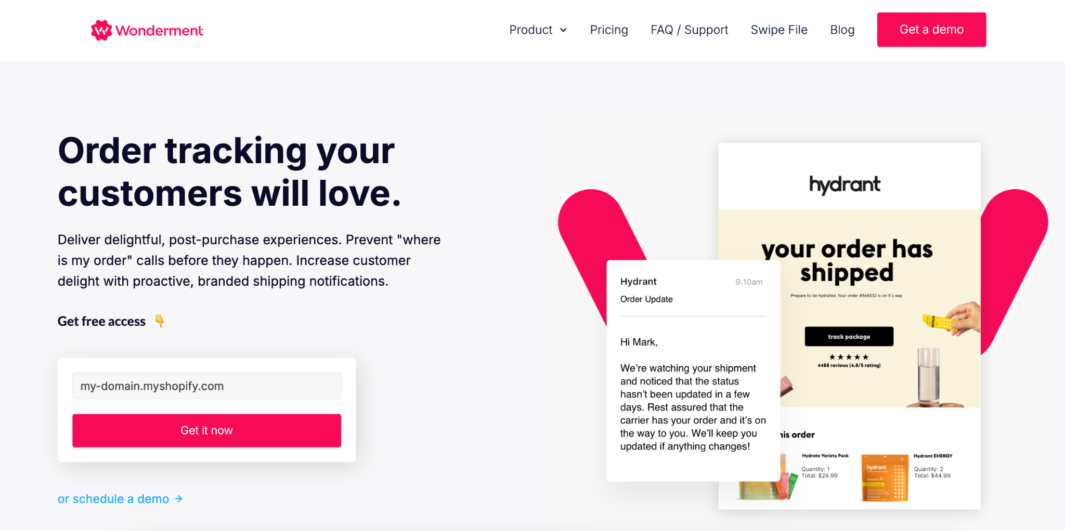
Wonderment has built a strong reputation among Shopify and direct-to-consumer brands by focusing on something that sounds simple but is surprisingly difficult to execute well. Clarity.
Customers generally do not want to decipher tracking information. They want to understand what is happening with their order and what they should expect next. Wonderment focuses heavily on making that process easier.
The platform combines branded tracking experiences with customer-friendly shipment visibility and delivery updates designed to reduce confusion throughout the delivery process. That emphasis on transparency has made it a popular choice among e-commerce teams that want a better customer experience without introducing unnecessary complexity.
Areas where Wonderment tends to stand out include:
- Branded tracking experiences
- Real-time order visibility
- Delivery notifications
- Shopify-focused workflows
- Customer-friendly interfaces
- Support ticket reduction
Sometimes the strongest tracking experience is not the most advanced one. It’s the one that answers customer questions quickly and clearly.
6. Parcel Perform
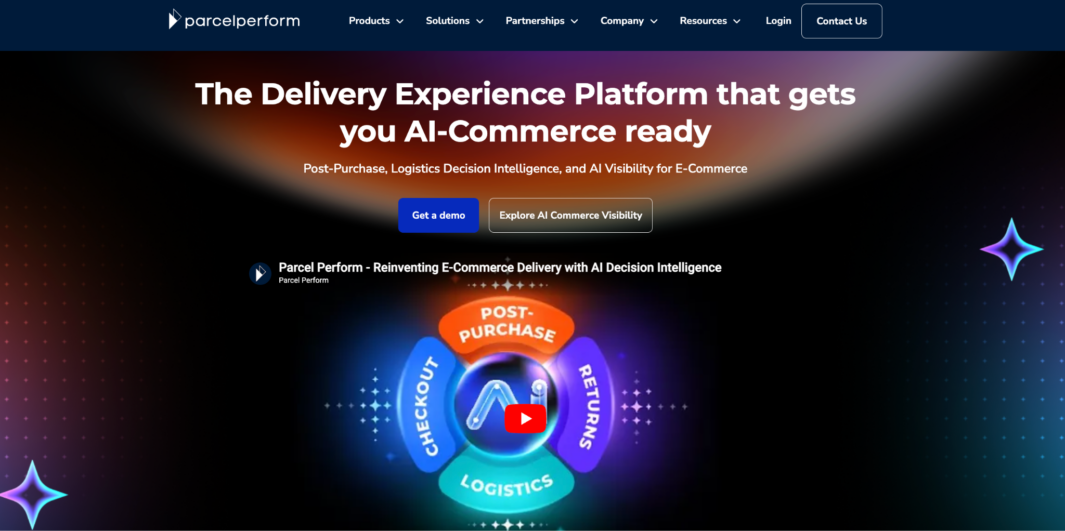
Many branded tracking platforms focus primarily on the customer-facing experience. Parcel Perform takes a broader view.
The platform combines branded shipment tracking with analytics and operational reporting that help retailers understand how their shipping network is performing behind the scenes.
For larger e-commerce businesses, that combination can be valuable. Improving the customer experience is important, but understanding why shipments are delayed, which carriers are underperforming, and where delivery bottlenecks exist can be equally important.
Parcel Perform is frequently evaluated by retailers that want visibility on both sides of the equation. Commonly cited capabilities include:
- Branded tracking pages
- Global shipment visibility
- Delivery analytics
- Carrier performance reporting
- Multi-carrier support
- Operational insights
The customer sees a polished tracking experience. The retailer gains a deeper understanding of the logistics network supporting it.
7. Track123
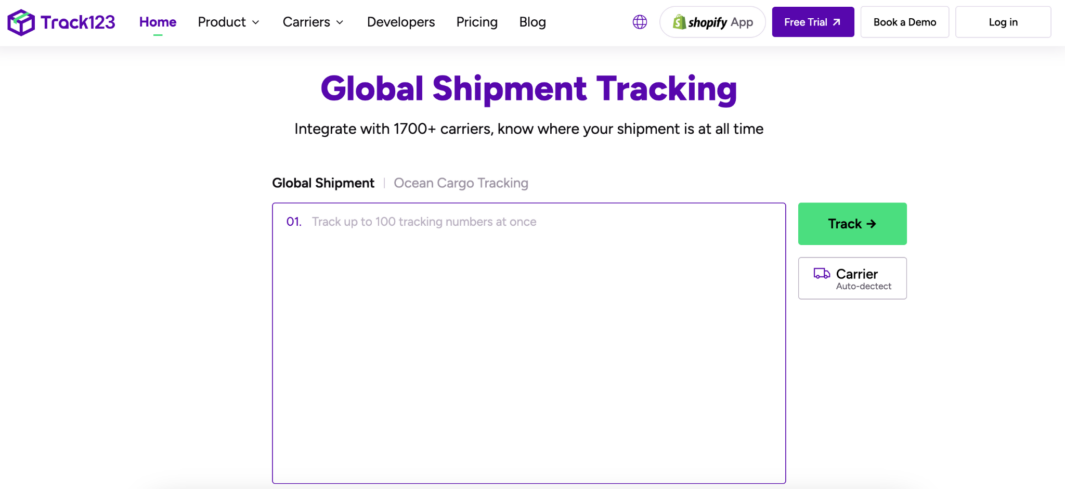
Track123 has become increasingly visible among e-commerce brands looking for an accessible entry point into branded shipment tracking.
Not every retailer is searching for a highly customized enterprise platform. Many simply want to move beyond generic carrier pages and create a more consistent customer experience after checkout.
Track123 addresses that need by combining shipment visibility with branded customer-facing tracking experiences and ecommerce integrations that are relatively straightforward to implement.
For smaller retailers and growing brands, that balance between functionality and simplicity can be attractive. Capabilities frequently associated with Track123 include:
- Branded tracking pages
- Shipment visibility tools
- Delivery notifications
- E-commerce integrations
- Customer tracking portals
- Multi-carrier tracking support
For many businesses, branded tracking begins with creating a more professional customer experience, and Track123 offers a relatively accessible path toward that goal.
Why Branded Tracking Matters More Than It Used To
A few years back, many retailers saw tracking pages as little more than basic operational tools. If customers could check where their package was, that was considered enough. But that mindset has clearly changed.
One big driver is how much customer expectations have evolved. Today’s online shoppers are used to getting timely updates, clear visibility, and consistent communication from the moment they buy something. When that information is hard to find or feels completely separate from the brand, it stands out — and not in a good way.
At the same time, brands have grown more protective of their customer relationships. They invest heavily in acquiring new buyers, earning trust, and building a recognizable experience. So handing those customers straight over to a generic carrier website right after checkout now feels like leaving money and loyalty on the table.
All of this has pushed branded tracking to evolve. What started as mostly a cosmetic touch has become a meaningful part of the overall post-purchase experience.
What Separates a Good Tracking Page From a Great One
Adding a logo to a tracking page is pretty straightforward. But building a tracking experience that genuinely improves the customer journey? That’s a lot more challenging.
The best platforms pull together several key pieces. Customers get a quick, clear sense of what’s happening with their order. Delivery updates feel relevant and easy to follow. Support options are right there when needed. And the whole experience ties in naturally with the brand’s voice.
What really counts is that customers walk away with fewer questions than when they first landed on the page. This matters because that lingering uncertainty is exactly what leads to extra support tickets, repeated tracking checks, and overall frustration.
Top branded tracking tools go beyond just showing shipment data. They help retailers present the information in ways that actually make sense to customers.
The Customer Touchpoint Many Brands Used To Ignore
Tracking pages rarely get the attention that storefronts, product pages, or checkout flows do. Still, they play a distinct role in the customer journey.
People usually visit them when confidence is most needed. A package seems stuck. Delivery dates change. Or nothing has updated for days. In those uncertain moments, customers are seeking reassurance. This makes the tracking experience far more important than it might first appear.
The platforms on this list handle things in their own ways. Yet they all understand the same core point: tracking is no longer just about showing where a package is.
For modern brands, it’s an opportunity to inform customers, strengthen trust, and maintain a consistent experience well after purchase.